
18 Oct
Will Neighbors of Afghanistan recognize Taliban government?
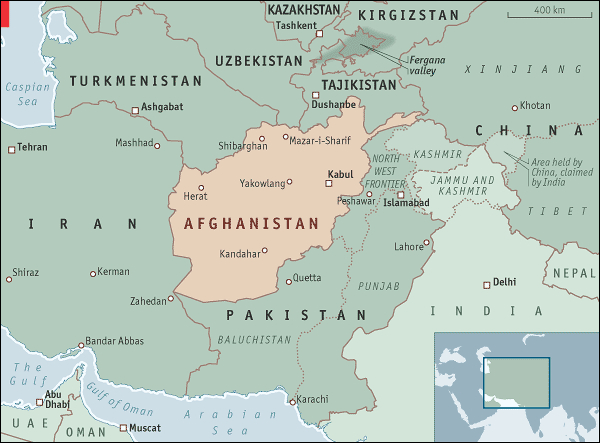
The withdrawal of US and NATO powers from Afghanistan is definitely leaving a political vacuum in South and Central Asia. The inquiry that many are posing is who will step in to fill it. Afghanistan's quick neighbors – Pakistan, Iran and China – all have unique interests in the country that they are probably going to seek after with restored power.
The shakiness has empowered armed groups along the Pakistan-Afghan line to prosper. Tehreek-e-Taliban (Pakistan Taliban) and Baloch guerillas have been assaulting focuses in Pakistan for quite a long time, killing more than 83,000 and incurred billions of dollars worth of loss on the Pakistani economy. Islamabad has frequently claimed that armed attacks on Pakistan have been arranged and executed from Afghan soil with the help of Indian insight. Simultaneously, Pakistani security agencies have been blamed for support the Afghan Taliban, particularly the Haqqani organization.
In this unique situation, the Taliban takeover of Kabul and the withdrawal of US powers were seen as a positive advancement by strategy and military circles in Islamabad. Their mentality has been: "We are cheerful in light of the fact that with the Taliban in power, our western boundaries will be gotten as archrival India will be out of the game."
Some have even theorized about a noticeable job that Islamabad might play in Kabul, explicitly after news on a September 4 visit to the Afghan capital by Pakistani Intelligence Chief Lieutenant General Faiz Hameed emerged.
Nonetheless, Pakistan may not partake in an unmatched authority over the Taliban, as some have estimated. Very much positioned sources uncovered that during an August 16 National Security Council meeting in Islamabad, the military commanders explained to the parliamentarians that the Taliban may not listen to Pakistan, as it used to previously. That is the reason, Islamabad is careful and not going for a performance trip to rapidly recognize the Taliban government, as it did during the 1990s.
Pakistan hopes that increased security under the Taliban would permit it to strengthen its exchange with Central Asia, where there is potential for critical development. It is looking at the Turkmenistan-Afghanistan-Pakistan-India (TAPI) pipeline, which would convey petroleum gas from Turkmenistan to the three South Asian countries.
Beijing fears a chaotic Afghanistan might make an overflow of viciousness Xinjiang area and hurt its vital territorial interest in the Belt and Road Initiative (BRI). The Taliban takeover has opened a strategic door for China into Afghanistan that could end up being loaded down with risks.
On July 28, Mullah Ghani Baradar and a nine-part Taliban assignment met with Chinese Foreign Minister Wang Yi in Tianjin, which brought about the Taliban giving confirmations that it won't permit Afghan soil to be utilized against against China in return for Chinese monetary help and speculation for the reproduction of the conflict desolated country.
This meeting was a defining moment for the Taliban, as Mullah Baradar had the option to acquire the support of a superpower that could assume a significant part in the reproduction and improvement of Afghanistan.
Also, China followed through on its guarantee. While different forces avoided the Taliban government reported toward the beginning of September, China reacted to its calls for humanitarian based aid and promised $31m worth of help. On September 23, Yi criticized the US for freezing Afghan resources during a virtual meeting of G20 foreign ministers. Not exactly seven days after the fact, first batch of aid from China arrived at Kabul airport.
China is additionally looking at to capitalize on the undiscovered mineral assets in Afghanistan, which are assessed to have a worth of $1 to $3 trillion. Aside from rare earth elements, the nation likewise has huge stores of gold, platinum, silver, copper, iron, chromite, lithium, uranium, and aluminum just as valuable stones. The Taliban seems, by all accounts, to offer access to these assets and utilize the income to set its standard.
Be that as it may, the Taliban takeover of Afghanistan likewise stresses China. In the event that the Taliban government neglects to control the East Turkestan Islamic Movement (ETIM) or other armed groups on Afghan region, this could weaken Xinjiang region. Moreover, a destabilized Afghanistan could hold onto other armed groups that could undermine or sabotage China's BRI initiative in the region. Insecurity in the nation would likewise forestall any Chinese mining or other monetary activities from starting off.
Iran, what shares a 921km (572-mile) line with Afghanistan, has additionally experienced the instability in neighbor for quite a long time. During the 1990s, Tehran was backing the Northern Alliance of hostile to Taliban powers and didn't perceive Taliban rule in Kabul.
Stressed by the huge US military presence in the area after 2001, Iran set up relations with the groups and attempted to subvert US interests by covertly supporting it.
Generally speaking, the Iranians were satisfied with the US withdrawal, which Iranian President Ebrahim Raisi named a military "failure" in an August 16 assertion. Be that as it may, his administration has additionally been stressed over security and political changes in the country from that point onward. In the beginning of September, it responded pointedly to the Taliban action against the opposition in Panjshir valley.
Aside from political interests, Iran additionally seeks Afghanistan for financial opportunities. US sanctions seriously hurt Iranian global trade, yet Afghanistan under the Taliban would not avoid economic engagement with it to please the US.
Iran will strive to keep up with its access to the Afghan market, which as of late has been overflowed with Iranian products. In 2018, Iran turned into Afghanistan's greatest trade partner, with its products coming to almost $2bn, notwithstanding an enormous volume of Afghan imports going through Iranian ports.
While keeping up with high exchange volumes, Iran will likewise try to stem the flow of narcotics through its porous border with Afghanistan. Iran is a significant market for Afghan opium and a significant corridor for smuggling of drugs to Europe and the Persian Gulf. The Taliban has been more than once blamed for profiting from the drug trade and encouraging it. Therefore, establishing effective mechanisms with the Taliban government to take care of the narcotics problem will be quite difficult for Iran.
Another issue between Kabul and Tehran are militants compromising Iranian security. Iran's border regions of Khorasan and Sistan-Baluchistan have seen various terrorist attacks lately accused on extremist groups working along the Afghan-Iranian and Pakistan-Iranian borders. The Taliban has assured that it won't permit armed groups on Afghan soil to threaten other countries, however Iran will hope for something else than simple words.
The multiple million Afghan refugees on Iranian soil also worry Tehran. With its own economy shredded and financial strains inside Iranian society rising, the Iranian government is not really in a situation to accommodate them or welcome more refugees. That is the reason Iran needs to see dependability in Afghanistan that would permit a portion of these refugees to return.
In this manner, Afghanistan's neighbors – Pakistan, China and Iran – all have a vested interest in a steady government in Kabul that can secure Afghan borders and economic activities. They will probably cooperate with each other, as well as Russia, to see that through.


Comments
John Doe says:
23/06/2014
Lorem ipsum dolor sit amet, consectetur adipisicing elit, sed do eiusmod tempor incididunt ut labore et dolore magna aliqua. Lorem Ipsum is simply dummy text of the printing and typesetting industry.
ReplayJohn Doe says:
15/06/2014
Lorem ipsum dolor sit amet, consectetur adipisicing elit, sed do eiusmod tempor incididunt ut labore et dolore magna aliqua. Lorem Ipsum is simply dummy text of the printing and typesetting industry.
John Doe says:
15/06/2014
Lorem ipsum dolor sit amet, consectetur adipisicing elit, sed do eiusmod tempor incididunt ut labore et dolore magna aliqua.
John Doe says:
15/06/2014
Lorem ipsum dolor sit amet, consectetur adipisicing elit, sed do eiusmod tempor incididunt ut labore et dolore magna aliqua.